
Why the Canadian Armed Forces’ recruitment challenge is also an accessibility challenge.
The CAF has regained momentum in recruitment. But if it wants to turn more applicants into capable, long-serving members, it must remove cognitive accessibility barriers from recruitment, training and military life.
6-minute read. Download this article in PDF format.
The Canadian Armed Forces has some welcome recruitment news.
In fiscal year 2025–26, it enrolled 7,310 Regular Force members, beating its target of 6,957 and marking its highest number of enrolments in more than 30 years . The target for 2026–27 is higher again: 8,200 enrolments.
That is real progress. It is not the whole story.
According to an Auditor General’s report , from April 2022 to March 2025, the CAF s received about 191,981 applications, yet recruited only about 15,000 members. That means around 176,000 applicants were screened out or opted out – a 1 in 13 chance of success. That represented a shortfall of 5,000 new members over that period.
From April 2022 to March 2025, CAF applicants only had a 1 in 13 chance of success, according to an Auditor General’s report.
The CAF also reported that 7,219 new members were trained through the Canadian Forces Leadership and Recruit School in 2025–26, with 77 per cent graduating. The same update notes that the CAF is planning for about 10,000 training seats to support 8,200 enrolments, in part to account for course sequencing and attrition.
In other words: getting people in the door matters, but it is not enough. If people enter the system but don’t make it through training, or leave because they can’t adapt to the culture, CAF still doesn’t get the qualified personnel it needs to support its growth plans .
A 2025 evaluation of CAF retention points in the same direction. It found that training delays and adapting to the CAF are key contributors to early attrition. That should make accessibility, accommodation and neuroinclusion part of the retention conversation, not just the recruiting conversation.
The barrier is not always the work.
For neurodivergent people or those with cognitive disabilities, the biggest barrier may not be the actual work. Often, it is the system around the work.
Barriers within that system can include unclear instructions, inconsistent expectations, ambiguous interview questions, sensory overload and unwritten social rules. It can also include forms, policies and accommodation processes that are hard to understand when someone is already under pressure or high cognitive load.
None of this means military service should be easy. It means the CAF should be clear about what it is actually measuring.
Can a person safely and effectively meet the standard? Or are they being screened out because they process information differently, answer interview questions less fluently, need written instructions, or do not perform confidence in the expected way?
That distinction matters.
The CAF already has a policy foundation.
The CAF is not starting from zero.
Its learning disability accommodation instruction says the CAF must accommodate individuals with learning disabilities during recruiting, training and education unless doing so would impose undue hardship or breach minimum operational standards related to Universality of Service. It also says the process is intended to support consistent and fair decisions while ensuring CAF operational requirements are met.
That is an important foundation. But a policy that waits for an individual to request an accommodation is not the same as a neuroinclusive strategy.
A policy that waits for an individual to request an accommodation is not the same as a neuroinclusive strategy.
It also points to the real problem: implementation, consistency and awareness.
A policy that exists on paper is not always accessible in practice. Candidates and members have to know support exists, understand how to request it and trust that disclosure will not harm their prospects. Recruiters, instructors and leaders also need clear guidance on how to respond.
Otherwise, accommodation can depend too much on self-advocacy, diagnosis, paperwork, local knowledge and luck.
Disclosure is a pipeline issue.
Disclosure is one of the most sensitive parts of this conversation.
Some applicants and CAF members may worry that disclosing a cognitive disability, a learning difference or a support need will hurt their chances of enrolment, training success, posting options or career advancement. That fear can lead to under-disclosure which prevents effective accommodation.
This is especially important because the CAF’s learning-disability accommodation process depends on the individual consenting to disclose and request support. If people do not trust the process, the process cannot work as intended.
It is also important not to confuse neurodivergence with mental-health concerns. They are not the same thing, although a person can experience both. Anxiety, depression, autism, ADHD and learning disabilities should not be collapsed into one broad category of “risk.” Each requires a different kind of understanding and response.
A safer disclosure culture would not mean saying yes to everyone. It would mean giving people clear information about what can be accommodated, what cannot, who sees the information and how it may affect decisions.
A safer disclosure culture would mean giving people clear information about what can be accommodated, what cannot, who sees the information and how it may affect decisions.
Neuroinclusion should be built into the system from the beginning, rather than added after someone has difficulty.
Standards matter. So does measuring the right thing.
The CAF’s Universality of Service policy exists for a reason. CAF members must be able to perform general military duties and common defence and security duties. Minimum operational standards are intended to protect operational effectiveness.
Neuroinclusion should not be framed as lowering those standards. That argument is both inaccurate and unhelpful.
The better question is whether the CAF is always measuring the right things in the right way.
A candidate may meet operational standards but still be disadvantaged by a process that rewards speed, social fluency, eye contact, quick verbal processing or comfort with ambiguity beyond what the role actually requires. Those traits may matter in some contexts. In others, they may say more about interview style than capability.
A candidate may meet operational standards but still be disadvantaged by traits that reveal more about interview style than capability.
The goal should be to identify real capability, not performative confidence.
Clear communication is operationally useful.
Plain language and accessible communication are not “soft” reforms. In a military context, they can support better performance.
Research cited by Lieutenant-Colonel Trevor J. Semeniuk , an autistic CAF leader who has written publicly about autism and leadership, suggests that organizations may improve communication when neurodivergent employees are recognized and supported. One reason may be that teams become more direct, concise and unambiguous.
That should matter to the CAF. Clear communication is already crucial to safety, training, discipline and operations. Making instructions, policies, job postings, interview questions and accommodation steps easier to understand would help neurodivergent candidates and members. It would likely help many others too.
This is where universal design becomes useful. Instead of waiting until someone struggles, the CAF can design more predictable and accessible processes from the start.
Other defence organizations offer lessons.
Canada would not have to invent every solution from scratch.
A RAND report on neurodiversity and national security found that neurodivergent people can bring strengths such as pattern recognition, analysis, visualization, memory, problem-solving and hyperfocus. The same report also identified barriers in recruitment and hiring, including confusing job descriptions, complex applications, traditional interviews and security-clearance processes.
Semeniuk makes a similar point in the Canadian military context. Autism is a spectrum, and not every autistic person will be suited to every role. But he argues that autistic strengths can be valuable in areas such as artificial intelligence, autonomous weapons, robotics and other complex defence challenges.
The lesson is not that neurodivergent people are automatically better at military work. That would just replace one stereotype with another.
The lesson is that conventional systems can miss unconventional talent.
How the CAF could strengthen neuroinclusion.
Whether these measures form a new strategy or strengthen work already underway, neuroinclusion should extend from the first job advertisement through training, placement, career development and retention.
The CAF could start with practical steps:
- Use plain language in job postings, instructions, policies and forms
- Make interviews more structured and less ambiguous
- Explain accommodation, medical and security screening processes clearly
- Train recruiters, instructors and leaders on cognitive accessibility
- Make accommodation requests easier to navigate
- Track where candidates and members leave the pipeline while protecting privacy
Just as importantly, this work should be co-designed with neurodivergent CAF members, veterans, applicants and accessibility experts. People who have navigated the system can often identify barriers that policy designers miss. Semeniuk makes a similar point, arguing that autistic experiences should be included in the development of personnel support and leadership programs.
The CAF has already shown it can increase enrolment. Its next challenge is turning that momentum into a trained, capable and sustainable force.
Canada cannot afford to overlook qualified people because its systems recognize only one way to communicate, learn or demonstrate potential. Neuroinclusion is not a favour to a small group of applicants. It is a practical way to reduce attrition, improve communication and help the CAF see capability more clearly.
Canada cannot afford to overlook qualified people because its systems recognize only one way to think, learn or communicate. Neuroinclusion should be part of how CAF recruits, trains and leads.
Authors
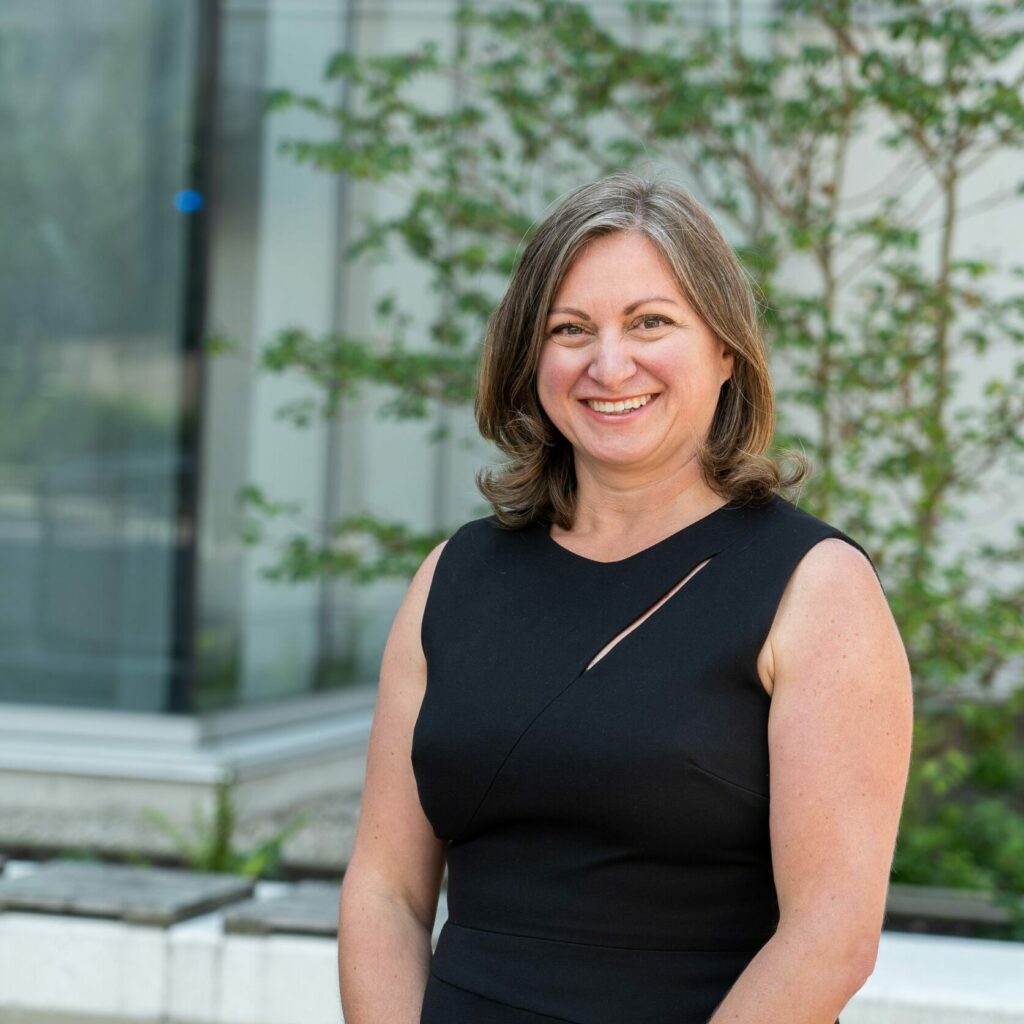
Dr. Virginie Cobigo
Virginie is the founder and Executive Director of Open. She is committed to promoting the social inclusion of people with cognitive disabilities and enhancing the cognitive accessibility of our environment. As a professor at the University of Ottawa, she leads research that supports evidence-based practice in sectors that support people with cognitive disabilities.